
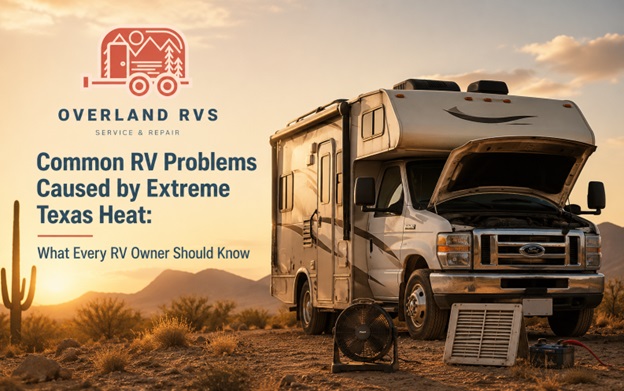


The Texas heat is hard on an RV during the summer. Extended high ambient heat pushes cooling systems, tires, batteries, and seals beyond what they see in other operating conditions with less extreme weather.
That should not deter you from summer RV travel. This is where understanding exactly how extreme heat affects your vehicle and what to check ahead of time has you covered before a problem renders you stranded.
Extreme Texas heat can cause RV problems, from tire damage to air-conditioning failures.
1. Tire Damage and Blowouts
Extreme heat is particularly harmful for RV tires. Tire pressure also goes up when the temperature rises. Low tire pressure creates even more heat while driving as tires flex, increasing the risk of damage.
Staying in the sun for long hours can also age your tires. The tread may still have sufficient depth, but UV exposure can cause the tire surface to crack and deteriorate.
Check your tires for these things before a summer trip:
- Cracks or visible damage
- Uneven wear
- Bulges
- Signs of dry rot
- Incorrect tire pressure
When the tires are cold, check the pressure with an air compressor that meets or exceeds the recommended pressure for your RV, not only on the outside of the tires.
2. RV Air Conditioner Problems
Few RV woes are more frustrating during a Texas heat wave than an air conditioning unit that will not work.
An RV AC unit might cycle on for hours when the outdoor temperatures are dangerously high. Dirty filters, blocked airflow, electrical problems, and worn components can compromise cooling performance.
You may notice that the unit:
- Blows warm air
- Runs continuously
- Makes unusual noises
- Trips a breaker
- Struggles to cool the interior
Clean the filters regularly, and keep an external part of the AC unit debris-free. If it still struggles to keep the cabin cool enough, have a mechanic check it before your next extended road trip.
3. Battery and Electrical Issues
Heat is even more damaging to all RV batteries.
The high temperatures also hasten battery degradation and shorten service life. But heat can go higher in ill ventilated battery packs.
Over time, electrical connections can also give out. Dirty or corroded joints can interrupt the power flow entirely and cause erratic operation.
Before travel, check batteries and connections. If you see swelling, leaking, frayed wires, or smell anything funny coming from a battery, quit using the problematic battery and take it to someone who can inspect it.
4. Refrigerator Cooling Problems
RV refrigerator heat exchange depends on good airflow. And that job could be harder for you during extreme outdoor temperatures.
A refrigerator that works fine in moderate weather may fail when the RV is baking in Texas heat. It can be aggravated if the refrigerator doesn’t have enough ventilation space around it.
Make sure refrigerator vents stay clear and don’t block airflow around the outside unit. When food isn’t as cold as it should be, don’t just blame the weather. A cooling-system or ventilation problem may require a professional touch.
5. Roof Seal and Water Damage
Because they can expand, contract, dry out, or decay over time.
Little cracks around roof penetrations may seem harmless. That means when rain comes, it can run between those weak spots and damage insulation, walls, ceilings, or cabinetry.
Inspect areas around:
- Roof vents
- Skylights
- Antennas
- Air conditioners
- Plumbing vents
- Other roof penetrations
Watch for cracks, peeling paint, loose, or flaking sealant. It is much better to catch a seemingly small leak early than to deal with unprotected water damage later.
6. Interior Damage from Heat
The temperature inside your RV in direct sun can skyrocket. But that heat can affect more your day-to-day comfort.
High interior temperatures might be responsible for damaging or aging your:
- Upholstery
- Flooring
- Cabinets
- Electronics
- Adhesives
- Window coverings
Sunlight can also bleach fabrics and interior finishes.
Whenever possible, park in the shade or install RV window shades, as this reduces solar heat. However, closing blinds when the RV is empty can also minimize sunlight flooding the living area.
7. Plumbing and Water System Problems
You can also expect plumbing problems inside your RV in extreme heat.
Your water hoses, fittings, and seals might wear out from heat exposure and sunlight. Components that are bolted to the outside, especially those in direct sun for extended time periods, will see their guts heat up fast − and this includes RGB lighting as well.
Check exposed hoses and connections for cracks, leaks, or brittleness. Protect exposed plumbing from excess UV, where applicable, and use RV-ready components.
8. Generator Overheating
Generators are critical when you need air conditioning in places not powered by the campground. However, they also produce a lot of heat.
A generator may have to run at or near its peak output for days on end in the Texas summer. Overheating and poor functionality may also stem from inadequate ventilation, low oil levels, dirty filters, or excessive loads.
Follow the manufacturer’s maintenance schedule, and never cover or restrict the generator’s air-ventilation holes. To reduce the risk of carbon monoxide exposure, always operate generators outdoors, following the manufacturer’s guidance.
9. Slide-Out and Seal Problems
Slide-outs include seals that help keep heat, dirt, humidity, and pests out of the RV. Extreme weather can dry out these seals or reduce their flexibility.
A damaged seal may allow unwanted air or moisture into the RV. This operation also can make the sliding-out device difficult to operate normally.
Inspect slide-out seals regularly. Keep them clean and utilize only those products prescribed by the RV manufacturer for maintenance.
Selecting an RV Based on Your Needs
Not all RV brands perform the same in harsh conditions. Performance in extreme heat can depend on build quality, insulation, HVAC capacity and effectiveness, electrical systems, and things like component selection.
A critical vehicle decision is how and where you’ll travel. If Texas is a regular destination, ask about insulation, air-conditioning capacity, roof construction, ventilation, and the lifespan of key components.
Brands and dealerships like Overland RVs can also be a good place to start for prospective RV buyers looking to figure out which makes and models suit their needs.
Final Thoughts
Texas heat can break down many parts and systems of an RV, but it doesn’t have to cause serious issues. Tires can deteriorate. Air conditioners can struggle. Batteries can degrade more quickly, and extended exposure to heat and ultraviolet light can take a toll on roof seals and plumbing parts.
Most heat-related issues can be prevented or detected early too, which is great.
Check your RV before summer, follow the manufacturer’s maintenance suggestions, and don’t overlook small warnings. However, in some cases, a little prep can go a long way toward keeping your RV comfortable, reliable, and ready for the next Texas adventure!